METABÒLIC CAMPUS
The new ETSEIB building
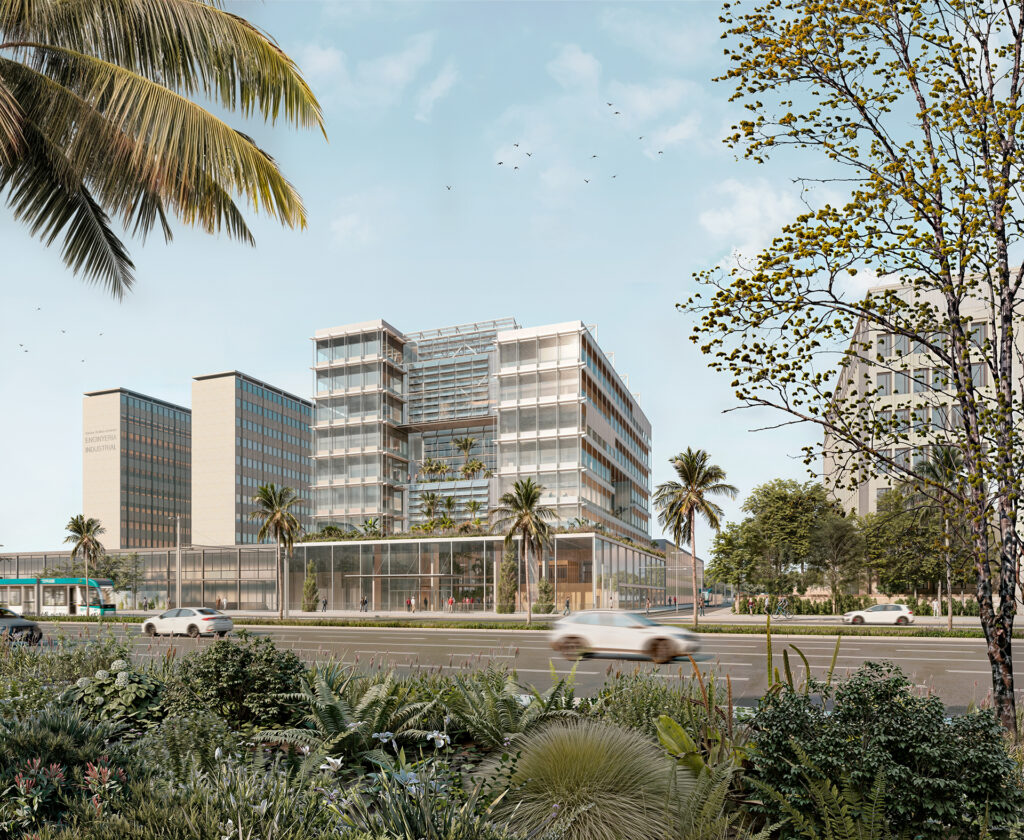
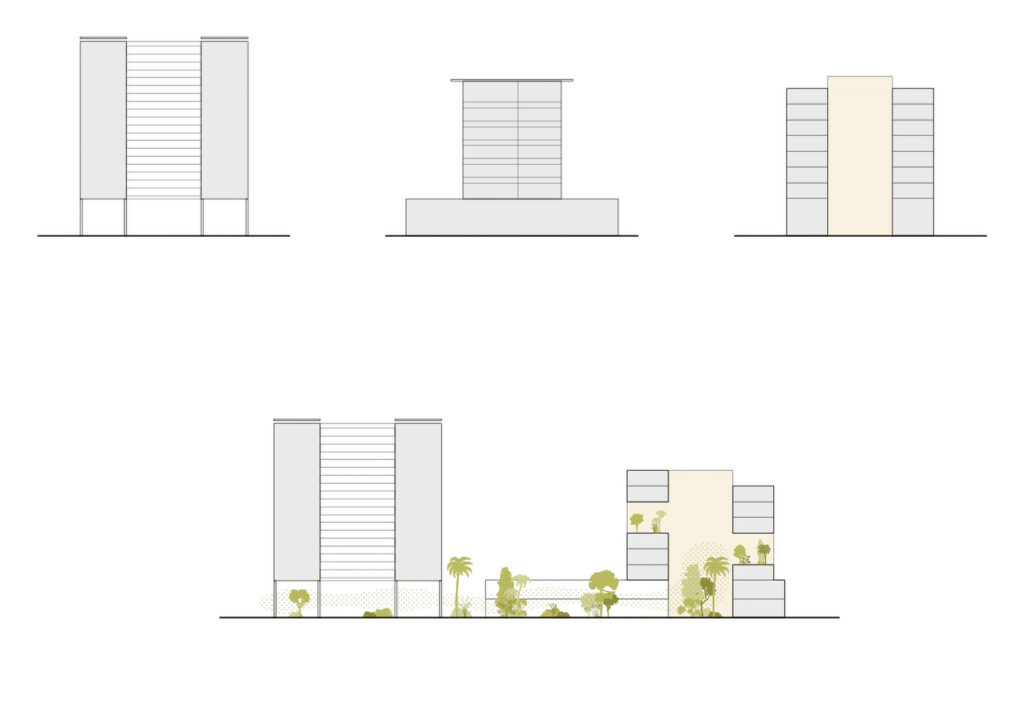
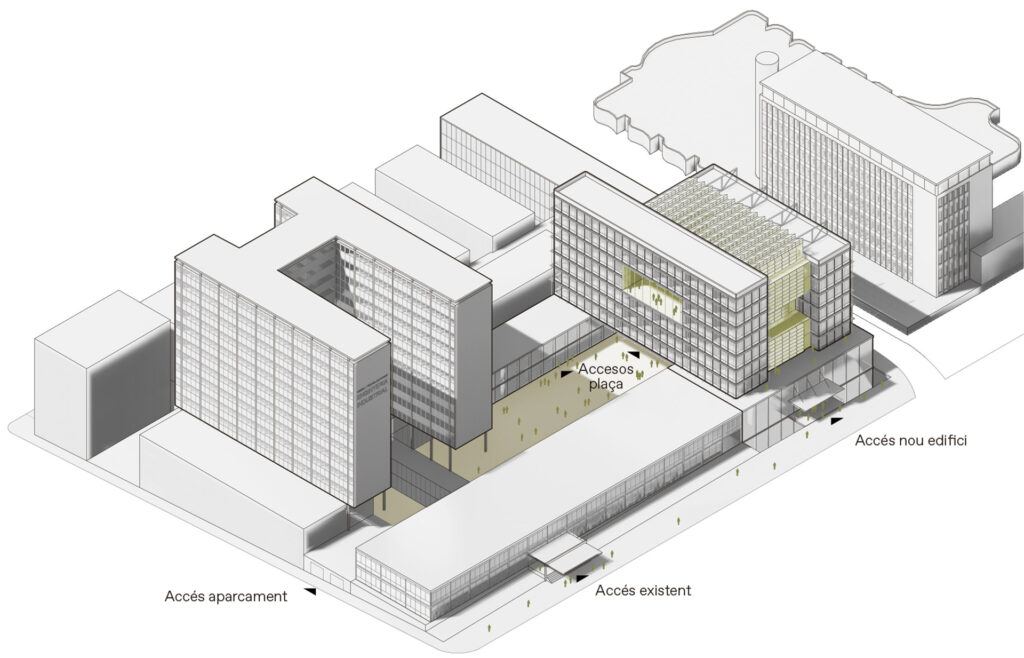
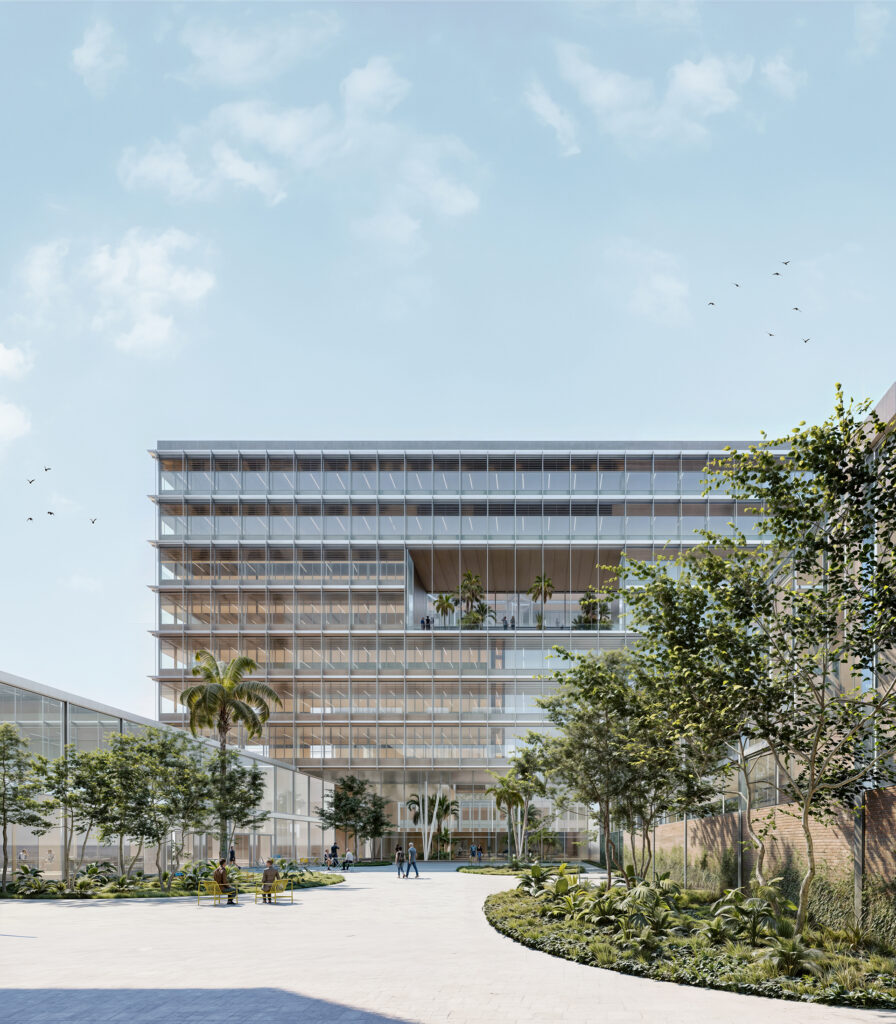
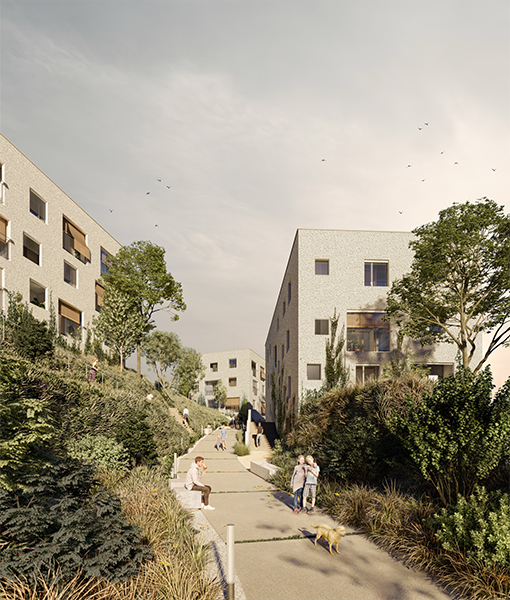
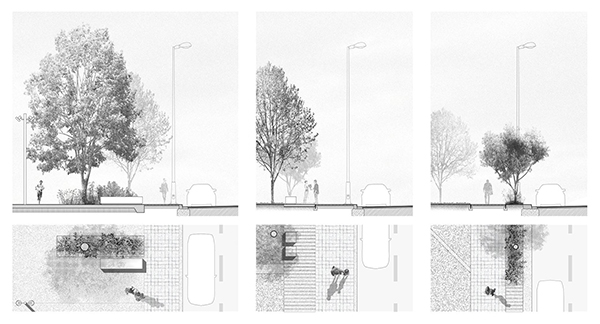
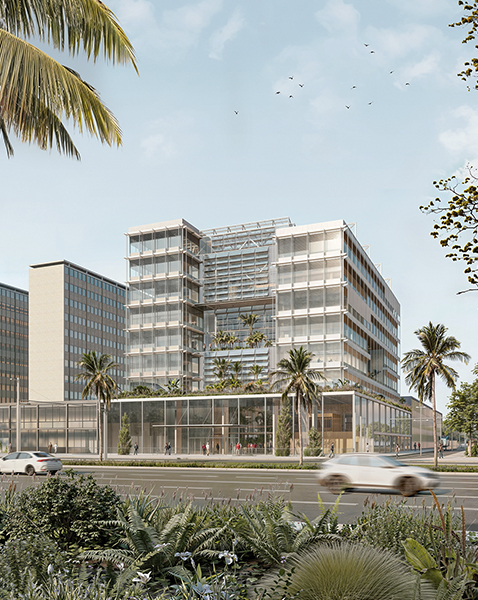
The project integrates into the Campus Sud, at the edge of Diagonal Avenue, proposing a porous and flexible building that avoids mimicry and suggests a “metabolist campus” model, where building and campus merge. The ground floor opens to the public space, ensuring continuity with the plaza and access points, while generating high-quality, bioclimatic intermediate spaces that foster interaction and transparency.
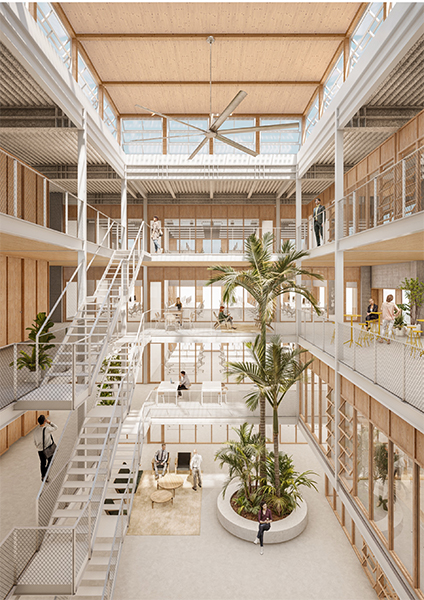
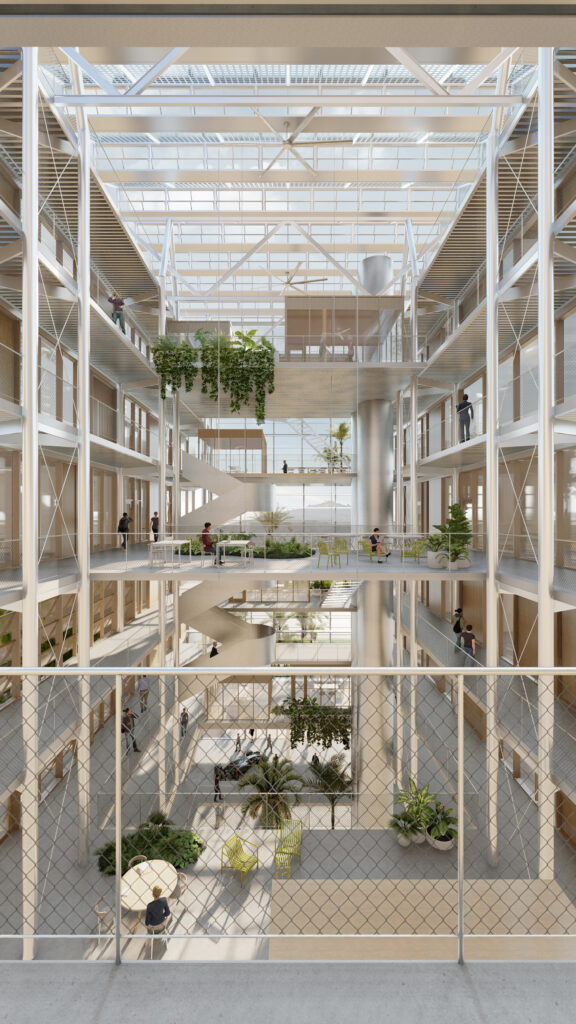
The design prioritizes the user, offering versatile, modular, and adaptable spaces with pedestrian-oriented circulation, cross ventilation, natural lighting, and climatic comfort. Enclosed corridors are eliminated in favor of elevated terraces and communal areas that can host diverse temporary uses.
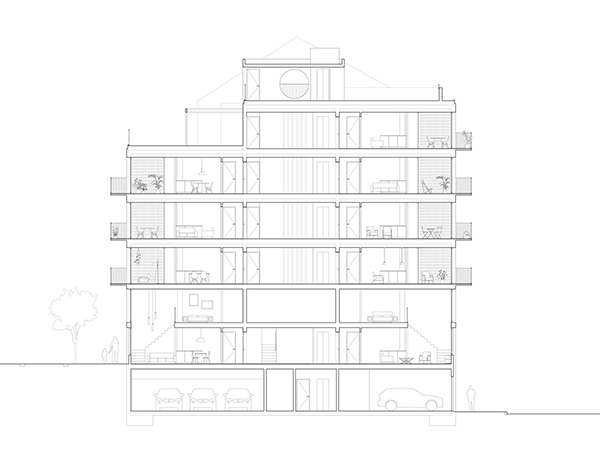
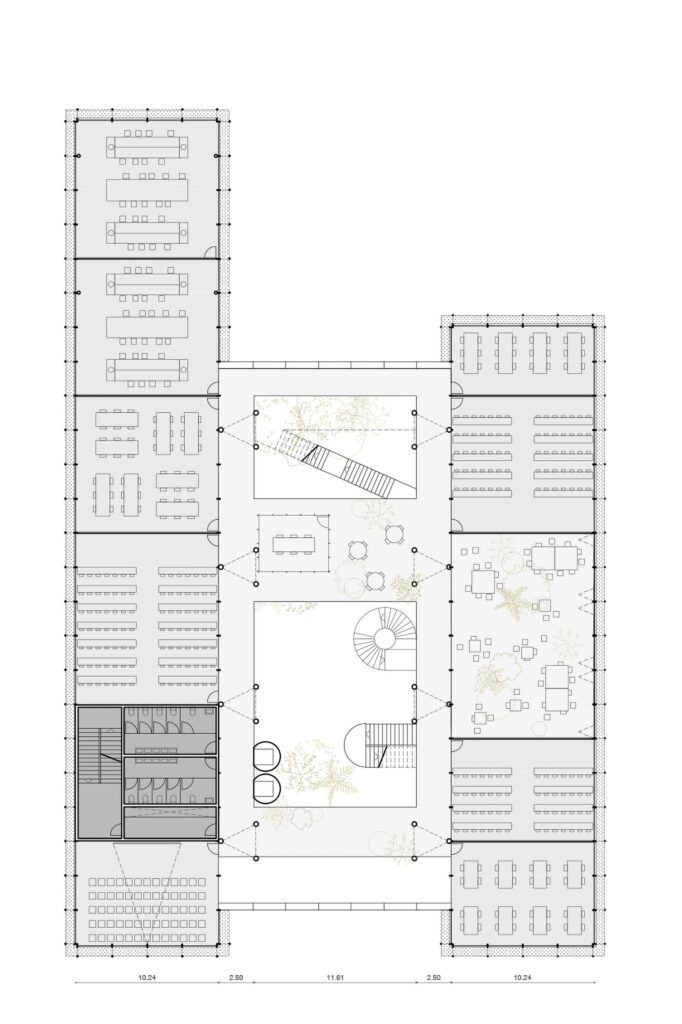
Typologically, the building responds to new pedagogical methodologies with large collaborative workspaces, distributed meeting rooms, and classrooms of varying sizes enabled by lightweight modular partitions. Teaching and administrative uses are clearly separated, while laboratory programs are integrated both in the upper floors and the basement.
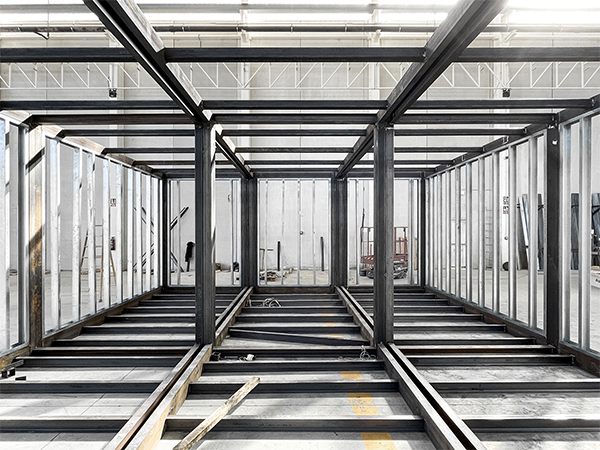
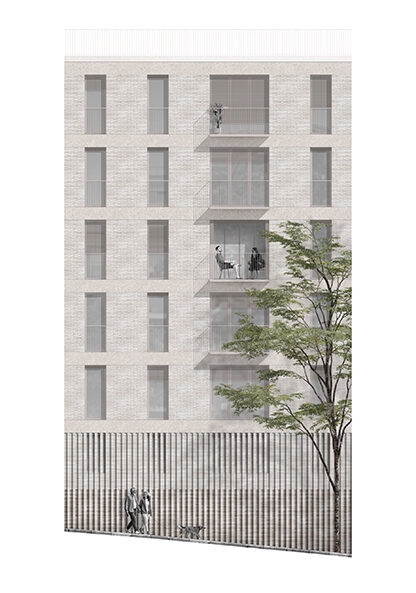
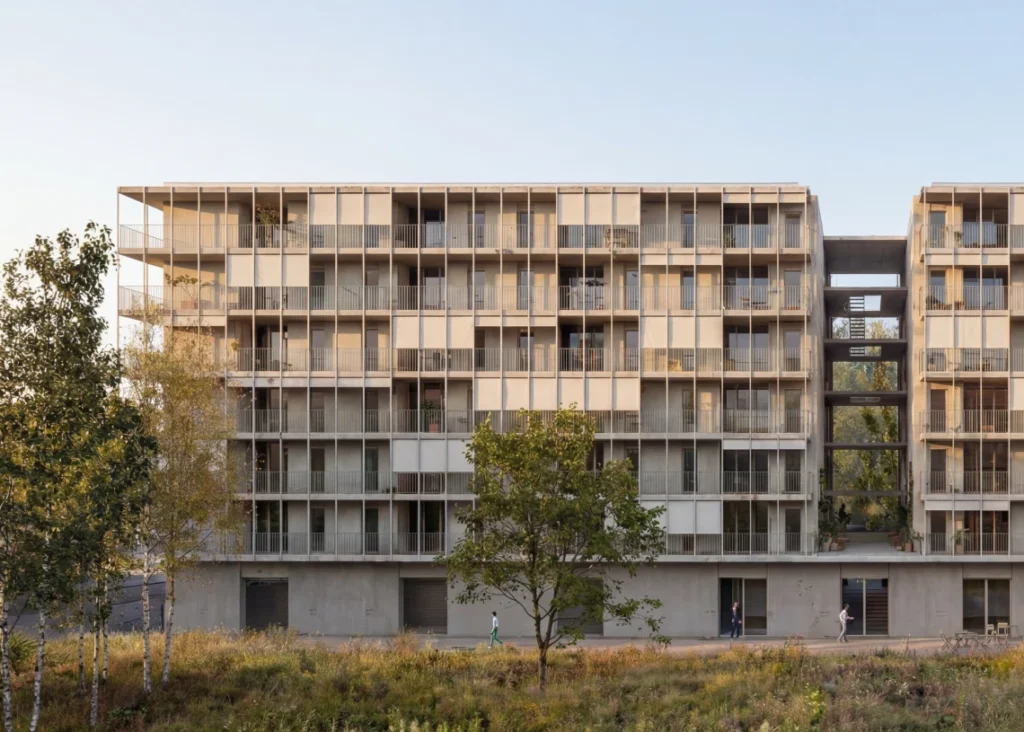
On a constructive level, the project reuses existing basements and foundations, employing a mixed industrialized structure with steel columns, timber slabs, and prefabricated dry-assembly elements. The envelope is a curtain wall with solar protections, combined with accessible roofs and green areas. Demountable systems and reusable materials are prioritized, reducing waste and facilitating maintenance.
Sustainability is achieved through passive strategies that minimize energy demand, supported by photovoltaic and aerothermal production, resulting in an nZEB building. A 53% reduction in carbon footprint is achieved compared to a reference building (10,800 tCO2e avoided). With 97% of materials sourced locally, the project positions the building as a material bank, promoting circularity and long-term environmental and economic viability.
Barcelona, 2024
Universitat Politècnica de Catalunya
Competition
With Picharquitects
METABÒLIC CAMPUS
The new ETSEIB building
The project integrates into the Campus Sud, at the edge of Diagonal Avenue, proposing a porous and flexible building that avoids mimicry and suggests a “metabolist campus” model, where building and campus merge. The ground floor opens to the public space, ensuring continuity with the plaza and access points, while generating high-quality, bioclimatic intermediate spaces that foster interaction and transparency.
The design prioritizes the user, offering versatile, modular, and adaptable spaces with pedestrian-oriented circulation, cross ventilation, natural lighting, and climatic comfort. Enclosed corridors are eliminated in favor of elevated terraces and communal areas that can host diverse temporary uses.
Typologically, the building responds to new pedagogical methodologies with large collaborative workspaces, distributed meeting rooms, and classrooms of varying sizes enabled by lightweight modular partitions. Teaching and administrative uses are clearly separated, while laboratory programs are integrated both in the upper floors and the basement.
On a constructive level, the project reuses existing basements and foundations, employing a mixed industrialized structure with steel columns, timber slabs, and prefabricated dry-assembly elements. The envelope is a curtain wall with solar protections, combined with accessible roofs and green areas. Demountable systems and reusable materials are prioritized, reducing waste and facilitating maintenance.
Sustainability is achieved through passive strategies that minimize energy demand, supported by photovoltaic and aerothermal production, resulting in an nZEB building. A 53% reduction in carbon footprint is achieved compared to a reference building (10,800 tCO2e avoided). With 97% of materials sourced locally, the project positions the building as a material bank, promoting circularity and long-term environmental and economic viability.
Barcelona, 2024
Universitat Politècnica de Catalunya
Competition
With Picharquitects
PROJECTS